

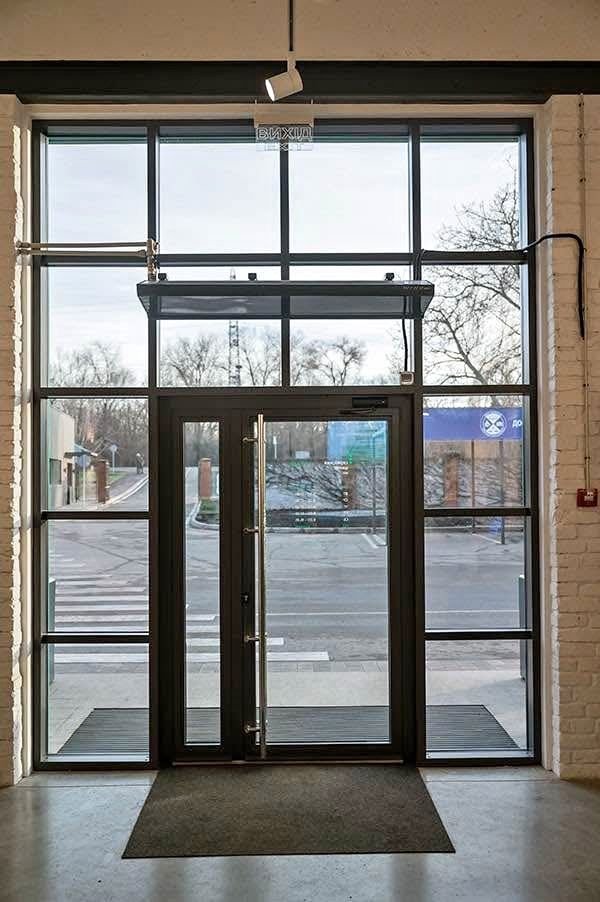
A door that needs a final push deserves attention
If your entrance stops just short of the frame, drags over the threshold or no longer latches on its own, record what happens before assuming you need a new door. Winter can expose existing alignment, sealing and hardware problems. A symptom that appears during cold weather does not, by itself, identify the failed part.
For a Montreal storefront or apartment entrance, the useful question is where the closing cycle goes wrong. Does the door rub throughout its travel, slow down near the end or reach the frame without catching?
1. Check the floor, threshold and bottom edge
Look for snow, ice, grit or a displaced entrance mat in the swing path. Clear loose obstructions safely and keep the entrance path unobstructed. If ice repeatedly forms, record where water collects so the underlying issue can be assessed.
Look for fresh scrape marks on the threshold or bottom edge. A door that rubs after the path is clear may need an alignment or hardware inspection; forcing it shut can add damage.
2. Look for rubbing and uneven gaps
From a safe position, compare the visible gaps around the closed door. Note whether an edge touches the frame, the latch side appears lower or the door seems to have shifted. Look for loose or damaged hinges, pivots and visible fasteners without dismantling the hardware.
Steel doors and aluminum entrances use different supporting hardware. A dragging aluminum door may involve its pivots or hinges; a steel door may have hinge, frame or leaf problems. Photos help narrow the inspection, but they cannot confirm the repair alone.
3. Check whether seals are resisting the door
Look for weatherstripping that has folded, detached or moved into the closing path. Check whether a door sweep catches the threshold. Tell the technician if the problem began after new seals or a threshold were installed.
A tighter seal is useful only when the door can still operate and latch properly. Have the fit assessed rather than cutting seals or increasing closer force to overcome a binding opening.
4. Observe the closer without adjusting it blindly
Some hydraulic closers change speed with temperature; performance depends on the model and fluid. Note whether the door moves unusually slowly, slams or stops in the last part of its travel. Photograph the closer label and any visible oil leakage.
Closing speed and closing force are different settings. Turning a speed valve does not simply give the door more power. Adjustment must follow the specific manufacturer instructions and account for the whole opening. Ask a technician to inspect the closer and resistance before changing settings.
5. Notice wind and building pressure
Tell the technician if the problem changes during wind gusts, when ventilation runs or when another entrance opens. Wind or a pressure difference across the opening can oppose closing.
Adding a stronger closer without checking the cause can make the entrance harder to use. A door technician and, where needed, the building ventilation contractor can assess the interaction.
6. Separate a latch problem from a closing problem
If the door reaches the frame but does not catch, note whether the latch meets the strike cleanly. Do not file the strike or alter panic hardware to make it fit. A technician should check alignment, latch movement and any electric strike or access-control timing.
If an automatic operator is fitted, include its make and model in your request. Keep hands clear of moving parts and leave operator adjustments to a qualified technician.
Repair or replacement? Diagnose the opening first
A serviceable door and frame may only need compatible hardware, seal replacement or an alignment repair. Replacement becomes a discussion when inspection finds significant damage, deterioration or an assembly that cannot meet the project requirements.
A full replacement should follow a diagnosis, not a guess based on the season. If an exit or fire door will not close or latch, arrange prompt professional assessment and follow the building’s safety procedures. Do not disable its hardware or prop it open as a workaround.
What to send Doors MTL
For help with a commercial steel door or aluminum and glass entrance in Montreal and surrounding areas, send photos and a brief description through our quote request form. We can review the scope and discuss whether a site inspection is needed.
- A full photo from each side, plus the threshold and frame gaps.
- Close-ups of hinges or pivots, closer, latch, strike and any panic bar.
- A short video showing the closing cycle, filmed from outside the swing path.
- When the problem began and whether it changes with temperature, wind or ventilation.
- Your project address and any recent hardware or seal changes.